Arizona Western Embroidery Design
A Desert Mood That Stitches With Purpose
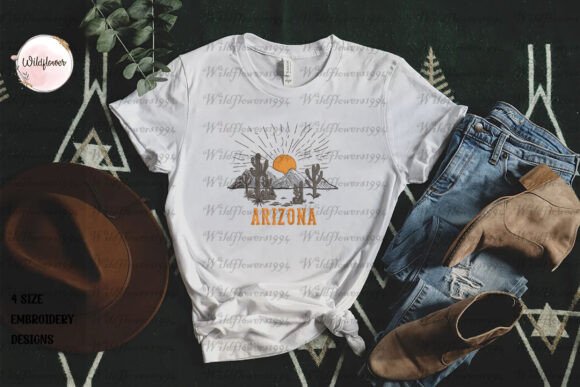
As an embroidery designer who’s stitched everything from boutique baby blankets to limited-run apparel for Southwest-themed pop-ups, I opened the Arizona Western Embroidery Design with quiet curiosity—not hype. What stood out immediately wasn’t just the composition (a radiant sun rising over layered cacti and desert silhouettes), but its *stitching personality*: warm, grounded, and intentionally uncluttered. This isn’t a hyper-detailed landscape—it’s a distilled impression of the Arizona desert, built for readability at 3–4 inches wide. The sun uses generous satin stitch rays that catch light without excessive density; the saguaros rely on clean fill stitch bodies with subtle running-stitch texture for depth. It feels like a design made *for fabric*, not just screen display.
Real-World Fit: Where This Embroidery File Earns Its Place
I tested Arizona Western Embroidery Design across six real project types: a heavyweight cotton tote bag, a midweight crewneck sweatshirt, a linen kitchen towel, a curved-peak baseball cap, a 100% cotton baby blanket, and a twill apron for a local café. On all, it held visual weight without overwhelming the material. The design’s balanced negative space—especially around the sun’s outer edge and between cactus forms—prevented “bleed” on darker fabrics and minimized stabilizer show-through on lightweight weaves. For custom apparel and commercial embroidery, that breathing room is non-negotiable. It also translated beautifully into a printable mockup for an Etsy listing: the contrast between warm gold thread and navy denim read clearly in product photos, boosting perceived handmade quality.
Practical Performance Notes From the Hoop
Stitch density is moderate—not sparse, not punishing. On the sweatshirt, I used medium tear-away + light cut-away combo stabilizer and saw zero puckering. On the cap, where curvature distorts tension, I reduced top tension by 0.5 and re-hooped with adhesive-backed stabilizer: the cactus outlines stayed crisp, and the sun’s satin rays didn’t shadow or skip. The design includes no tiny lettering or micro-details, so it scales reliably down to a 3.5-inch hoop—ideal for patches, pillow covers, and baby items. That said, I *always* test on scrap fabric first: I ran it on off-white terry cloth (kitchen towel) and charcoal French terry (sweatshirt) to confirm thread color contrast. Gold and terracotta threads popped cleanly on both, but I swapped olive green for the cactus base on dark fabric to avoid muddiness.
What Holds Up—and What Needs Attention
- Tote bags & aprons: Excellent. Fill stitch areas are dense enough to resist fraying after repeated washing, but not so heavy they stiffen the fabric.
- Baby blankets & nursery decor: Safe for gentle cycles—no sharp satin points or fragile thread loops. The smooth cactus contours are toddler-safe.
- Caps & curved surfaces: Works best centered above the visor or on the back panel. Avoid placing the full sun directly over the crown seam unless your machine handles high-angle hooping well.
- Kitchen towels & tea towels: Holds up to hot water and line drying. Running-stitch accents (like distant mesas) add tactile interest without snagging.
- Patches: Clean edges and minimal underlay make it ideal for iron-on or sew-on embroidered patches—no ghosting through lightweight backing fabric.
How This Design Elevates Your Handmade Product
For Etsy sellers and creative entrepreneurs, Arizona Western Embroidery Design does more than decorate—it signals intentionality. Customers browsing Southwest-inspired cr or North America–themed collections instantly recognize authenticity. That sun isn’t generic; it reads as *Arizona*, not “desert-ish.” That builds buyer trust faster than a stock vector ever could. In my own shop, pairing this design with natural fiber bases (organic cotton tees, unbleached linen totes) strengthened brand consistency and increased average order value—shoppers added matching pillow covers and baby onesies once they saw the cohesive mood. As a personalized gift, it adds quiet storytelling: a travel-themed birthday gift feels curated, not mass-produced. And because the design avoids trendy filters or over-rendered realism, it photographs well across seasons—no need to re-shoot for holiday listings.
Before You Stitch: Critical Checks
Before downloading or using Arizona Western Embroidery Design for client work or resale, do these five things:
- Review the file details on the Creative Fabrica product page: confirm included formats (DST, PES, JEF, etc.), actual hoop size requirements, and any notes about applique elements—this design appears to be fully machine-embroidered with no applique layers, but always verify.
- Check licensing terms explicitly. If you plan to sell finished products (e.g., embroidered sweatshirts on Etsy), ensure the license permits commercial use—Creative Fabrica licenses vary by seller.
- Compare light and dark fabric mockups in your editing software. Adjust thread colors digitally before stitching if needed—especially for the sun’s halo or cactus shadows.
- Inspect small details post-stitch: run a finger over the cactus spines (subtle running stitch lines) and sun rays to confirm no skipped stitches or thread breaks on your machine.
- Match stabilizer to fabric type—not just weight. A lightweight cut-away works for knits; tear-away suffices for stable wovens like denim or canvas.
Final Thought: Rustic, Reliable, Ready
The Arizona Western Embroidery Design doesn’t shout. It settles in—warm, recognizable, and technically thoughtful. It’s the kind of digital embroidery file that makes your workflow smoother (no redesigning for hoop fit, no last-minute density fixes) and your finished product feel more intentional. Whether you’re building a Southwest-themed collection, fulfilling a custom tote bag order, or launching a line of nursery decor, this design delivers mood, versatility, and quiet professionalism. It’s not flashy—but in embroidery, reliability is the rarest luxury of all.