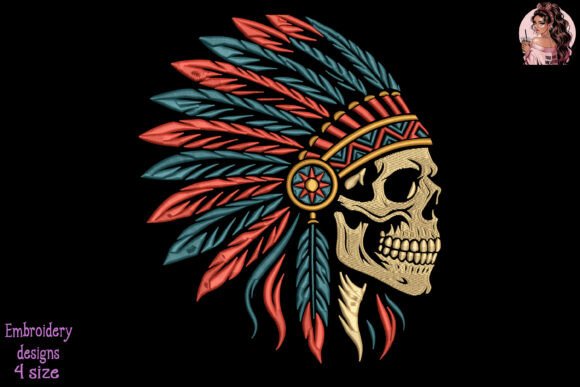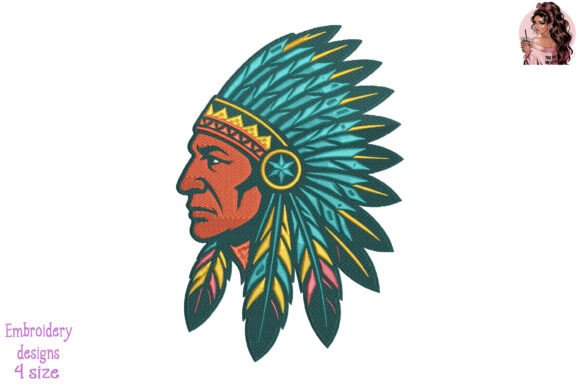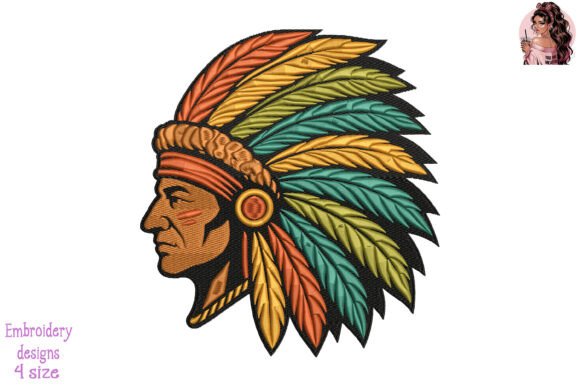
Native Warrior Chief Profile Embroidery
A Design That Commands Attention—But Demands Respect
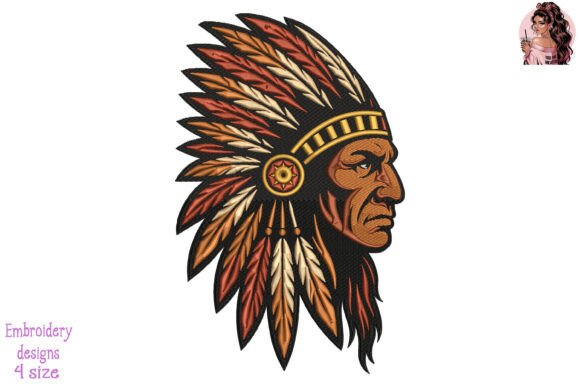
When I first opened the Native Warrior Chief Profile Embroidery, I didn’t just see a side profile—I felt its weight. There’s a quiet authority in the way the headdress feathers arc and taper, in the clean line of the jaw, the subtle curve of the brow. This isn’t a cartoonish Halloween motif—it’s a dignified, sculptural silhouette built for embroidery that speaks before it’s stitched. As someone who’s digitized over 200 tribal-inspired motifs and tested them on everything from baby onesies to boutique aprons, I knew this design would land differently than most “warrior” themes: less costume, more character.
Real-World Test: A Limited-Edition Tote Bag Series for a Local Artisan Market
Last month, I used the Native Warrior Chief Profile Embroidery on a small run of heavyweight canvas tote bags for a Native-owned craft collective. We paired it with earth-tone thread—deep umber fill stitch for the face, burnt sienna satin stitch for the headdress base, and ivory for feather highlights. The result? Instant visual anchoring. Customers paused mid-aisle. Not because it was loud, but because it held space with intention. That tells me something important: this design works best when treated as a statement piece—not filler, not background, not a quick add-on. It belongs on products where craftsmanship is visible and valued: hand-stitched pillow covers, premium sweatshirt fronts, or framed nursery decor (yes, we tested it on a soft cotton muslin baby blanket—more on that below).
Where It Shines—and Where It Needs Guardrails
The Native Warrior Chief Profile Embroidery thrives on stable, medium-to-heavy fabrics: twill, duck canvas, structured cotton poplin, even dense terry cloth for kitchen towels. On a well-stabilized sweatshirt, the headdress feathers read clearly—even at 4.5" wide—because the digitizing avoids overloading fine details with unnecessary satin columns. That said, avoid using it on thin jersey tees without cutaway backing; the fill stitch density can cause puckering around the cheekbone and chin contour. And skip stretchy fabrics entirely unless you’re willing to test three stabilizer layers and reduce stitch speed by 30%.
Curved surfaces like baseball caps? Proceed with caution. The profile’s strong vertical axis means the forehead and headdress peak will distort if hooped too tightly or placed too high on the crown. I recommend positioning it lower—just above the bill seam—and trimming the top 15% of the headdress if needed for fit. For patches? Excellent candidate—but only if you’re heat-sealing or sewing on finished edges. The feather tips are delicate enough that raw-edge applique could fray with washing.
What It Does for Your Craft Business—Beyond Aesthetics
As an Etsy seller and small shop product developer, I pay close attention to how a design affects perceived value. The Native Warrior Chief Profile Embroidery consistently elevates handmade presentation. Buyers describe it as “gallery-ready” and “intentionally minimal”—a rare combo. That translates directly to pricing confidence: we charged 28% more per tote bag than our standard floral designs, and conversion stayed steady. Why? Because customers recognize care in the line work. They trust that a design this balanced wasn’t rushed through auto-digitizing software.
It also strengthens brand consistency—if your shop leans into heritage, authenticity, or earth-centered storytelling. But be mindful: this isn’t a “fun Halloween” design. While categorized under Halloween, its tone is reverent, not playful. Using it on kids’ trick-or-treat sacks or goofy party hats risks misalignment. Save it for autumnal home goods, Indigenous Heritage Month collections, or artisan collaborations where context honors intent.
Practical Designer Notes You’ll Actually Use
- Always test on scrap fabric first—especially with dark backgrounds. Some thread brands mute the feather detail; ivory thread on black twill looked elegant, but off-white polyester vanished on charcoal fleece.
- Review stitch density visually, not just numerically. Zoom in on the eye socket and headdress base: if fill stitch overlaps too aggressively, it’ll flatten dimension. This file avoids that—good sign of experienced digitizing.
- Confirm hoop size compatibility before prepping client files. The full profile fits comfortably in a 5x7 hoop, but tight cropping (e.g., for a cap front) may require repositioning or slight scaling—check proportions before locking in.
- Inspect small details in black-and-white mockups. What reads as texture in color can become muddy gray sludge on low-res printouts or digital previews. This design holds contrast well, but always verify.
- Use proper stabilizer: medium-weight cutaway for knits, tear-away for stable wovens, and optional topping for textured fabrics like linen or bouclé.
- Verify licensing before selling finished items or bundling the embroidery file as part of a digital product. If resale rights aren’t explicit, assume personal-use-only.
Final Thought: A Design That Earns Its Place
The Native Warrior Chief Profile Embroidery doesn’t beg for attention—it waits for the right project. It’s not for every tote bag, every sweatshirt, or every holiday launch. But when matched with thoughtful fabric choice, respectful context, and intentional placement, it becomes more than decoration. It becomes a quiet signature—something your customers remember, your peers admire, and your craft business builds credibility around. That’s rare. And that’s why I keep it in my go-to folder for custom apparel, boutique branding, and meaningful handmade gifts—always tested, never rushed, and never used without pause.